
88%
Organizations using AI in 2025 - Stanford AI Index 2026
Artificial Intelligence
An in-depth exploration of how Artificial Intelligence is reshaping industries, redefining human potential, and unlocking transformative opportunities across the globe. Artificial Intelligence and Machine Learning are embedded in all JAWRAA's platforms.
88%
Organizations using AI in 2025 - Stanford AI Index 2026
70%
Organizations using GenAI in at least one function in 2025
$91.9B
Global private AI investment in 2022 - historical benchmark
$15.7T
PwC projection: potential global contribution by 2030
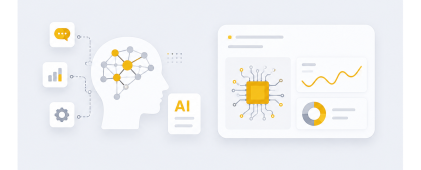
Artificial Intelligence is the simulation of human intelligence processes by machines, especially computer systems. These processes include learning, reasoning, problem-solving, perception, and language understanding.
Overview
The source profile frames AI as a practical transformation layer: it automates complex processes, delivers predictive analytics, enhances data processing and interpretation, and strengthens decision-making across business and infrastructure contexts.
AI Overview
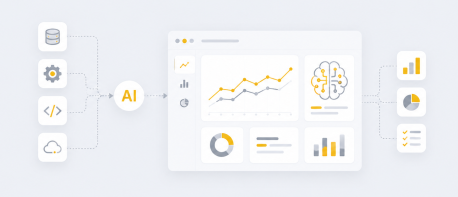
This platform integrates with existing systems to enhance capabilities in data processing, interpretation, and effectiveness. From machine learning and natural language processing to computer vision and robotics, AI categories are rapidly expanding and enabling real-world autonomy and precision.
AI Capabilities

AI-driven decision-making for smart infrastructure.

Computer vision, NLP, LLM, Machine Learning, RAG, AI Agent, and MCP automation systems (Agentic AI).

Predictive analytics and anomaly detection for operational insight.

Scalable AI models for real-time insights.
Understanding AI
External benchmarks verified in August 2026. Company capabilities and service claims remain sourced from the JAWRAA business-unit profile.
How We Do It
This workflow follows the sequence presented in the AI section of the business-unit profile and turns it into a cleaner design system.
Clearly define what problem you are trying to solve with AI.
Data collection, data cleaning, and data preprocessing.
Select supervised, unsupervised, or reinforcement learning approaches.
Prepare training, testing, and validation datasets.
Train the model using the training dataset.
Use the testing set and validation set, if available, to assess performance.
Tune the model parameters based on evaluation results to improve performance.
Deploy the model to a production environment where it can make predictions or decisions based on new data.
Benefits & Challenges
AI Use Cases
The source AI page highlights these use cases directly and notes that more customized use cases are possible.


Let's transform this company story into a stronger digital experience that reflects leadership, trust, and future-ready ambition.